Is It Legal to Record a Conversation? A Plain-English Guide
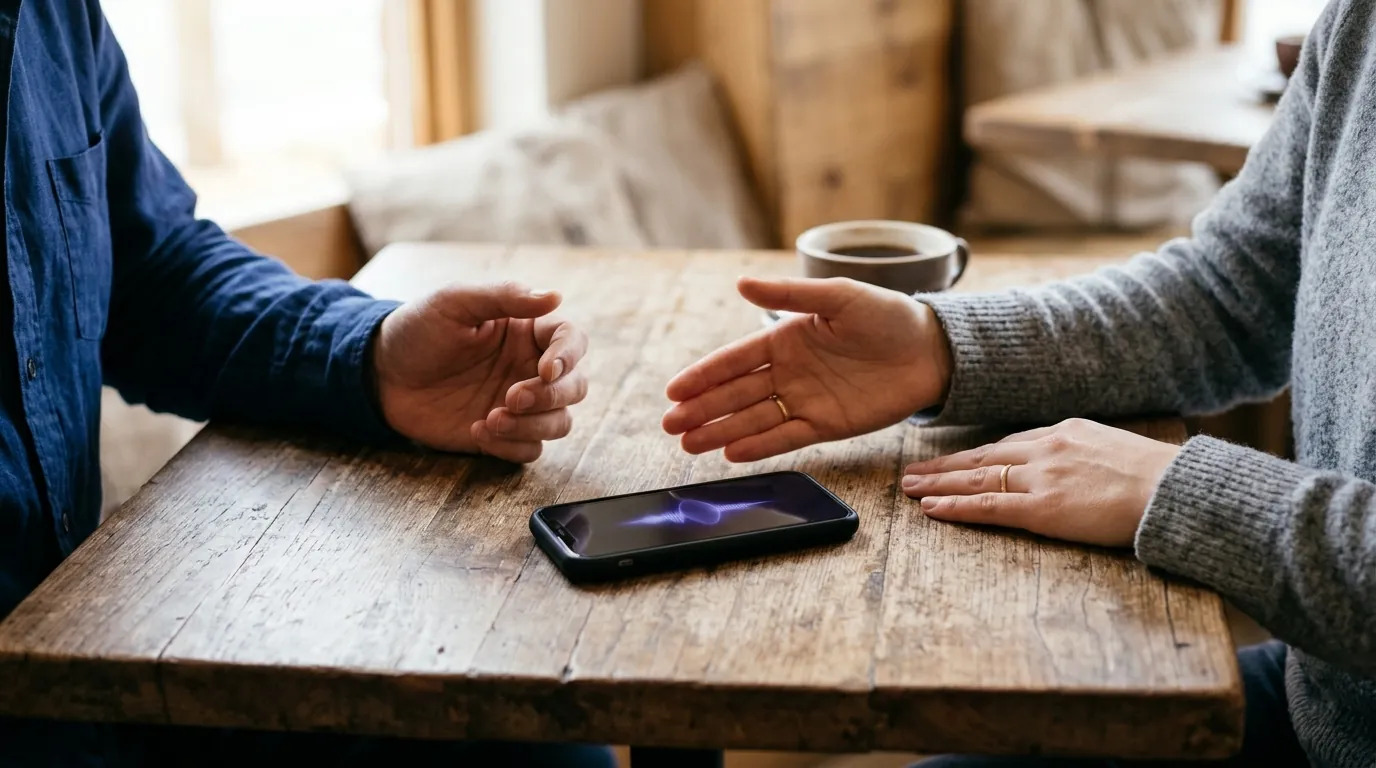
In the United States, federal law and most states allow you to record a conversation you are part of without telling the others; this is called one-party consent. A minority of states, including California, Florida, Illinois, Maryland, Massachusetts, Pennsylvania and Washington, generally require everyone's consent, and other countries have their own rules. The safest practice anywhere is simple: tell people you're recording and ask.
This article is general information, not legal advice. Laws differ from place to place, change over time and have exceptions. For a specific situation, talk to a lawyer where you live.
One-party and all-party consent
Recording laws mostly come down to one question: who has to agree?
- One-party consent. If you're taking part in the conversation, your own agreement is generally enough. This is the rule under US federal law and in most states.
- All-party consent, often called "two-party consent". Everyone in the conversation generally has to agree to the recording. A minority of states follow this rule, including California, Florida, Illinois, Maryland, Massachusetts, Pennsylvania and Washington.
| Rule | Who must agree | Where it applies in the US |
|---|---|---|
| One-party consent | At least one person in the conversation, which can be you | Federal law and most states |
| All-party consent | Everyone in the conversation | A minority of states, including California, Florida, Illinois, Maryland, Massachusetts, Pennsylvania and Washington |
The word "generally" matters. Each state's law has its own details and exceptions, so treat this as a starting point, not a final answer.
What one-party consent doesn't cover
- Conversations you're not part of. The rule is about conversations you take part in. Leaving your phone recording in a room after you walk out is a different situation, and you shouldn't assume it's allowed.
- What you do with the recording. Being allowed to record and being free to share or publish the recording are separate questions. A recording made legally can still break trust, or a workplace rule, once it's passed around.
- Other people's rules. Your employer, your school or a venue can set its own rules about recording, even where the law allows it.
When people are in different places
Calls and video meetings often connect people in different states or countries, and it isn't always clear whose rules apply. The cautious approach is to act as if the strictest rule applies: tell everyone on the call and ask before you start recording.
Outside the US
Rules differ by country, and US rules don't travel with you. If you live outside the US, or the people you're recording do, look up the local rules, or take the simpler route and ask everyone first.
How to ask without making it awkward
Most people say yes when you explain why you're recording. A few ways to put it:
- Meeting: "Mind if I record this so I get the notes right? The recording stays on my phone."
- Interview: "I'd like to record this so I quote you accurately. Is that OK?"
- Call: "Before we start, I'd like to record this call for my notes. Is everyone OK with that?"
- Lecture: "Would you mind if I record your lectures for my own study? I won't share them."
Habits that make consent clear:
- Ask at the start, before anything important is said.
- Get the yes on the recording. Start recording, then ask, so the agreement is part of the file. If anyone says no, stop and delete what you recorded.
- Tell people who join late. They weren't there when you asked.
- Respect a no. Take notes by hand instead, or offer to pause for the part someone is uncomfortable with.
- Only promise what's true. If you say "it stays on my phone", use an app that keeps it there.
Recording at work
Even where state law allows it, recording at work is also a matter of policy and trust. Before you record meetings:
- Check your employer's policy on recording. Some workplaces don't allow it, or allow it only with notice.
- Say it out loud at the start of the meeting, and say why: accurate minutes, fewer follow-up questions.
- Offer to share the transcript or the notes with everyone who was there.
- Pause the recording for confidential topics, such as personnel matters.
- Delete recordings you no longer need.
Our guide to transcribing meetings without a bot covers the practical side: where to put the phone, speaker labels and minutes.
Recording in class
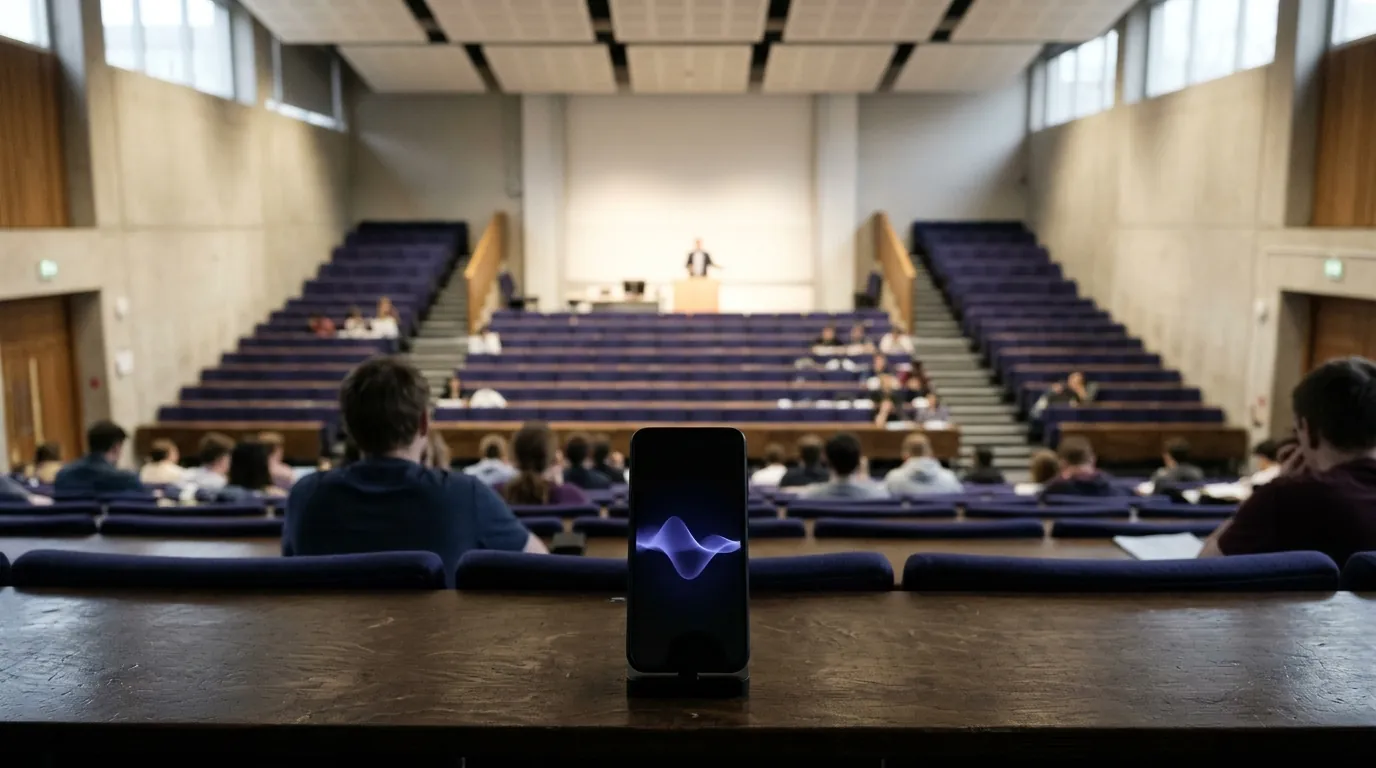
Schools and instructors often have their own rules. Ask the instructor before you record lectures, keep the recordings for your own study, and don't post them: class discussions include other students' voices. If you need recordings for accessibility reasons, your school's accessibility office is the place to ask. More in how to record and transcribe lectures.
Recording phone calls
Phone calls bring their own complications. Apps generally can't record a call on the same iPhone. In some regions, recent iOS versions let you record a call from the Phone app, and everyone on the call hears an announcement that it's being recorded. See how to transcribe phone calls on iPhone.
After you record: keep it private
Consent covers making the recording. Protecting it is the next step, and it's easy to overlook how many places a recording can end up: cloud transcription services, shared folders, email threads.
An app that transcribes on the device keeps that list short. Hushtext runs Whisper on your iPhone or iPad; the audio and text never leave the device, there's no account, and it works in Airplane Mode. For conversations that are confidential, our privacy checklist for transcription goes further.
FAQ
Is it legal to record someone without them knowing?
Under US federal law and in most states, you can generally record a conversation you're part of without telling the others. In all-party consent states, you generally need everyone's agreement. Telling people is the safest practice everywhere.
Is California a two-party consent state?
Yes. California is one of the states that generally require everyone in a conversation to agree to a recording.
Can I record a meeting at work?
It depends on your state's law and your employer's policy. Check the policy, tell everyone at the start of the meeting, and ask.
Do I need permission to record a lecture?
Ask the instructor first. Your school may have its own rules, and in all-party consent states, classmates who speak in a discussion are part of the conversation too.